
Glazing Options: A Look Into Glass
Glazing, it’s not just for donuts. In the framing world glazing refers to the glass or acrylic used to cover and protect an artwork within a frame. Not all glazing is created equal and there are several factors to consider when choosing the best option for your piece. Let’s take a closer look at the different options of our most used glazing option: glass.
Regular Ol’ Glass
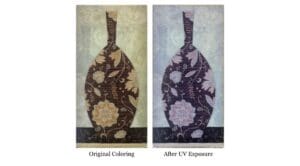
Glass, at its barest function, serves as a way to view the artwork beneath it whilst acting as a physical barrier from dust, debris, or other bits and bobs that otherwise might harm it. Regular glass performs those jobs just as well as any other glazing option might. However, untreated glass offers minimal protection against a more damaging opponent: UV light rays. In recent years art materials such as paints and printing inks have become more and more lightfast, but even modern pieces will fade in the sun when not provided the proper protection. You can see the sun damage done to the vase print below; the warm burgundy has discolored to a dark purple and the background has faded to pale blue. This pigment loss is irreversible. Once gone, the original colors are gone for good. The best way to keep this damage from occurring is by using a conservation rated glass with a protective UV coating.
Conservation Glass
Tru Vue Conservation Clear glass, or ConClear as you might hear around the gallery, looks the same as regular glass but has an anti-UV coating that blocks 99% of UV rays. This greatly reduces the damage and fading that the sun can do to art. However even that 1% can cause damage over time so we recommend keeping your artwork out of direct sun exposure even if protected by this special glass.
Non-Glare Glass
There are two types of non-glare glass, both of which come with the same anti-UV coating as ConClear. The first, Tru Vue Reflection Control, has a soft, frosted look. The frost, while being quite effective at reducing glare, also has a tendency to soften the look of the art behind it. While it can be an excellent choice when framing for a low-contrast or vintage design, the work becomes more and more unclear the farther it sits from the glass.
The second non-glare option is Tru Vue Museum Glass, perhaps the glass chosen the most often in our galleries. Museum Glass has two coatings: one anti-UV, the same as ConClear, and one anti-glare. This anti-glare coating doesn’t soften or blur no matter how far the art is from the glass. The glass is so clear in fact, and the anti-glare so strong that often a piece appears to have no glass covering it at all.
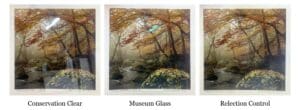
In the image above, we put Fred Eberhart’s Robinson River Elms behind three different types of glass. Conservation Clear allows for fairly strong light reflections while Museum Glass has a small, greenish reflection caused by a direct light source. However, both of these have a crispness and stronger contrast between darks and lights which Reflection Control mutes.
There are multiple factors to consider when choosing the right glazing option for your piece. If you have any questions about which is best for your artwork and space, give us a call or come visit us in person! We have designers at both galleries ready to offer their expert opinions.