
Art vs Craft: The Future of Textiles as Art
Just recently, The Boston Museum of Fine Arts held an exhibit titled, Fabric of a Nation: American Quilt Stories. The exhibition explored American history as told though the visual history that is quilting. In doing so, they steered away from the history of American quilt patterns or techniques as the focus but on the art as a representative for specific historic moments or events in time. They treated the quilts as both art and artifact- a debate which depicts how museums display art and represent their meaning in the surrounding context of the piece’s history and the surrounded objects throughout an exhibition. I first read this concept in a companion piece to Dr. Susan Vogel’s exhibit Art/Artifact, and was given an assignment in undergrad to go to the Smithsonian’s National Museum of African Art and reflect on how each object was displayed. It’s difficult for me to go into a museum now and not look at art through this lens.
The debate on the display of items has grown significantly in the last 30 years—especially for items like the Bamana Chi Wara, ceremonial headdresses rather than pure sculptural art. The most important aspect is context: where objects were made and why. Textiles, like Chi Wara pieces, live between worlds of art and artifact. Narration lends power but also shifts meaning. Can textiles be both art and artifact? I believe the answer is absolutely yes.
You may be asking, what does art vs. artifact have to do with art vs. craft? And how does this apply to textiles?
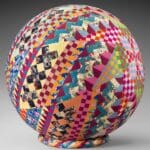

I remember visiting the exhibit Something Pertaining to God: The Patchwork Art of Rosie Lee Tompkins at the National Museum for Women in the Arts as a teenager. These quilts blurred the line between art and women’s craft—made to decorate walls, not keep you warm.
There is a longstanding stigma against quilts as “true” art. Seen as women’s work or craft, they’ve historically been displayed as cultural artifacts rather than fine art. But museums are now showing them as they would paintings or sculptures. Why not? We see the same phenomenon in cooking, fashion, and other gendered creative fields.
Why aren’t textiles consistently accepted as fine art? They appear in contemporary art museums like The Met, and in decorative arts museums like the V&A in London. Fashion often receives more attention than textile art, yet even avant-garde fashion is displayed differently.
The intersection between textiles and art is widespread. Salvador Dali collaborated with Elsa Schiaparelli. William Morris introduced textile patterns into the Arts & Crafts movement. Andy Warhol illustrated fashion ads. El Anatsui uses metal like textiles by “sewing” components together. Christo & Jeanne-Claude wrapped world landmarks in fabric. Time and time again, textiles shape art history.
The display and interpretation of textiles is incredibly nuanced. Globally, in museums and galleries, as culturally significant objects or fine art—these are important ideas for the future of textiles.
So where do we go from here? What is textile art’s place in modern and contemporary galleries?
Some Current Museum Examples
-
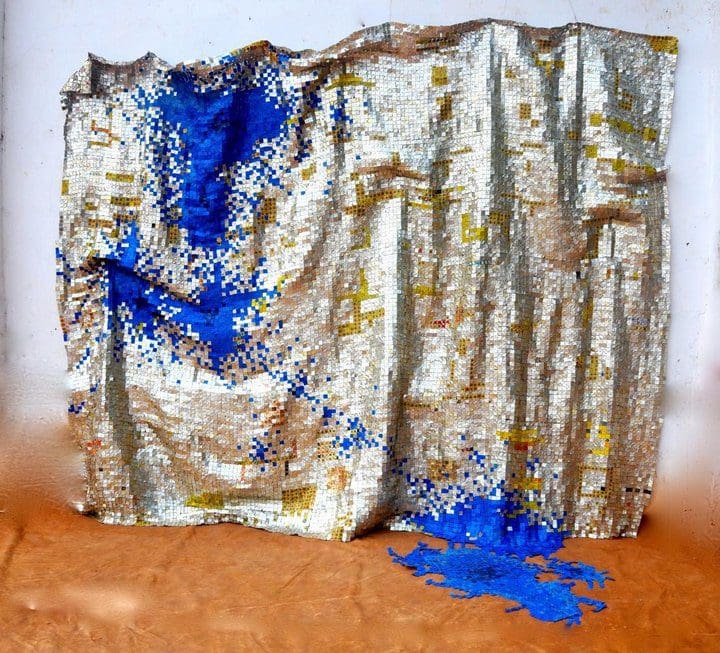
- El Anatsui, Ink Splash II, Aluminum and copper. © El Anatsui. Image courtesy The Tate Britain. For more info read here.
-
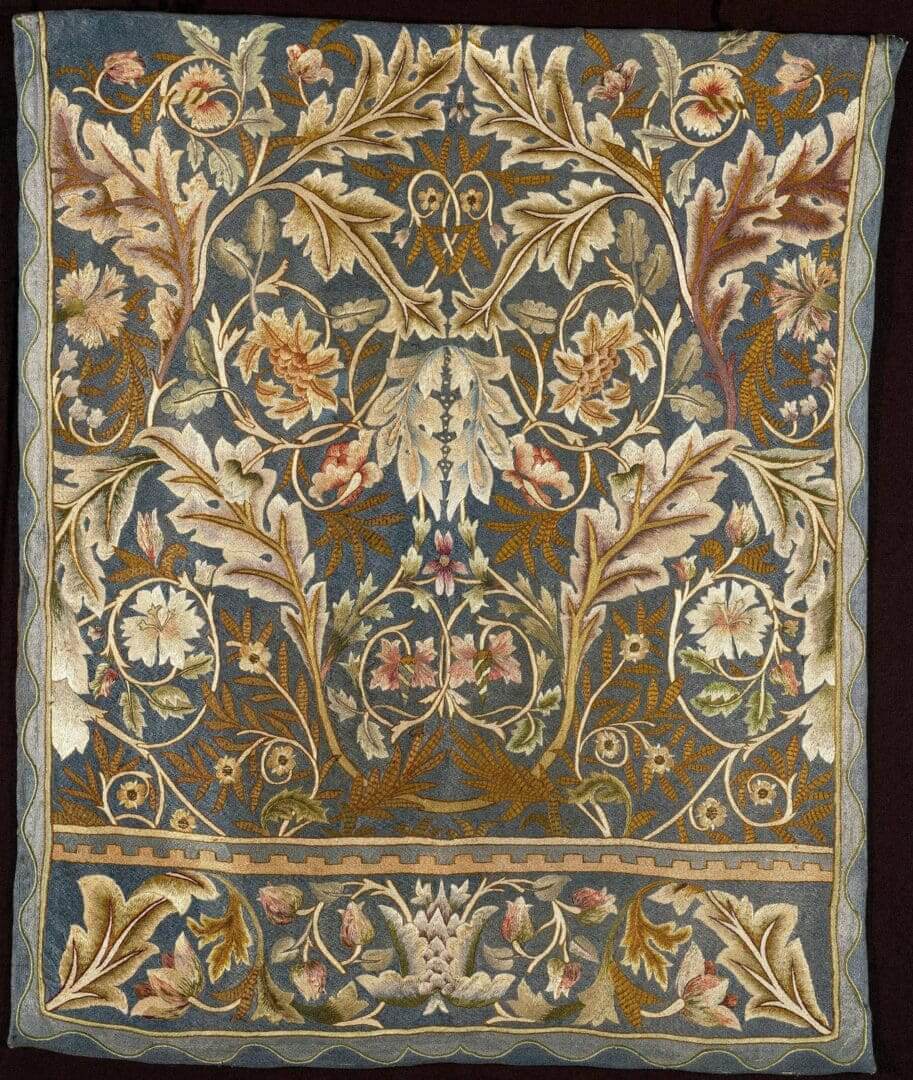
- Wall hanging, designed by William Morris, made by Ada Phoebe Godman, 1877, Yorkshire, England. © Victoria and Albert Museum, London. For more info read here.
-

- Christo and Jeanne-Claude, ‘L’Arc de Triomphe, Wrapped’, Paris, 1961-2021, Paris, 2021. Photo: Wolfgang Volz; © 2021 Christo and Jeanne-Claude Foundation. For more info read here.
Looking for insight on how museums, galleries, and private collectors display textiles? Keep an eye out for March’s blog post to see how you can display pieces in your own home! You can be notified by following us on social media or signing up for our mailing list! Keep an eye out on all of our channels as we get ready for the opening of our textile exhibit, Harmony, June 2022!
Do you have any favorite textile art you’ve seen in a museum or gallery?
Share with us in the comments!
Want to learn more about art vs craft? Here’s a great TED Talk:
Interested in seeing a textile exhibit in or around Virginia? Check out these museums:
National Museum of Women in the Arts
George Washington University Textile Museum
Maryland Center for History and Culture
About the Author
Jennifer Sweetapple is the gallery manager at Broadway Gallery’s Alexandria location. She holds a Masters in Dress and Textile Histories from the University of Glasgow, focusing on the evolution of movie costumes and fashion culture.